Document, don't create (AI Slop)
AI has made video easy to make and hard to believe. Your process is how you prove you're real.
By Visual Narrative

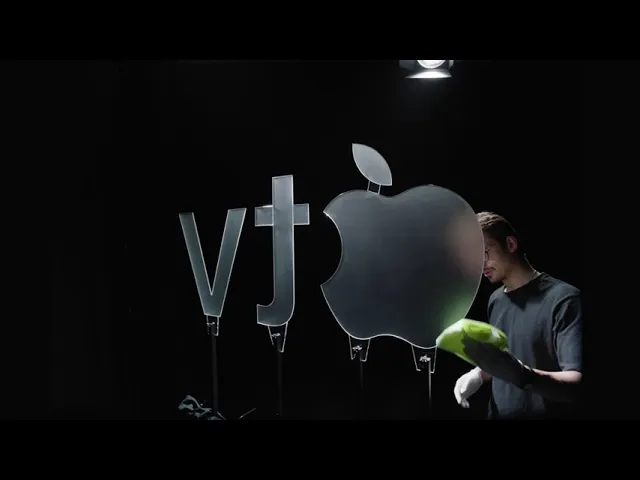
Apple's new TV ident is made of glass.
Real glass, cut and polished, lit and filmed in camera. All that effort for a few seconds before a show starts, and most people will have forgotten it before the credits finish.
If Apple hadn't told us, nobody would have known. You could make something almost identical on a laptop in an afternoon.
I call this positive virtue signalling: showing a value through the quality of the work, rather than just claiming to hold it. Apple is signalling that craft and attention to detail matter to them, even when most people will never notice the effort.
It reminds me of the story about Steve Jobs insisting the inside of a Mac should look as beautiful as the outside. The user might never see it, but the standard still matters.
Apple didn't just show us the finished ident. The story of how it was made became part of its appeal. So don't just claim your business cares about quality. Show the care in your process.
Gary was right (mostly)
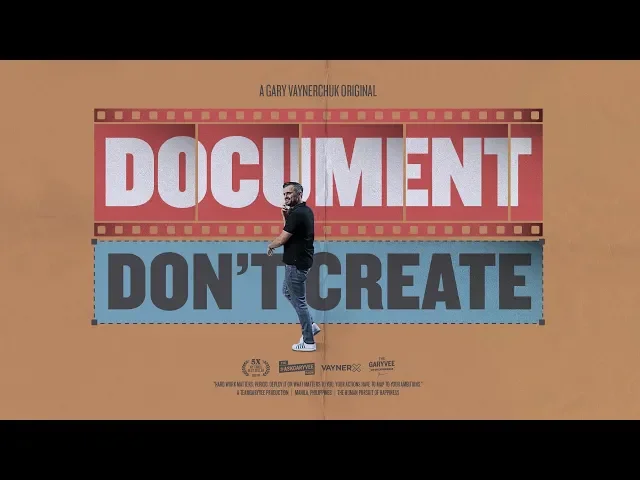
Just over ten years ago, in 2016, Gary Vee told everyone to "document, don't create". Stop waiting for the perfect video and point a camera at the work you're already doing.
He had a point. I've sat through enough rounds of script tweaks and sign-off meetings to know most businesses don't have a video problem. They have an overthinking problem.
But the world has changed. In 2016, the barrier was the time and effort it took to make anything. In 2026, it's the opposite. Businesses can churn out endless content, and most of it feels interchangeable.
AI can hand you a polished script, a talking head, some stock-style images and a product explainer before lunch. It all looks professional, but it tells your buyer almost nothing about the business behind it, and our spidey senses are starting to tingle.
In an AI-saturated internet, people don't just want to see what you sell. They want to see how you think, how you work and who's doing the work.
The process is the proof
Documenting works because it's hard to fake. Not impossible. But faking the ongoing work of a real business, week after week, with the same faces on the same sites, is a lot of effort for anyone.
Plenty of B2B videos claim "we're experts in our field". Documenting the process says "here's how our expertise works in practice".
A manufacturer can show its quality checks and the production problems it solved. A contractor can show its site planning and safety procedures. A software company can show how customer feedback changed the product. Every one of those is full of context, imperfection and specific detail, which is exactly what makes it hard to fake.
And people connect with people. A CEO explaining a difficult decision. A technician showing a problem customers keep running into. A designer explaining why a tiny detail matters more than it looks.
That matters more in B2B than anywhere, because buying decisions come with risk and long-term relationships. Buyers aren't only judging the product. They're judging whether the people behind it understand their problem and can be trusted to deliver.
The finished product tells people what you sell. The process tells them why they should believe you.
Nobody wants to watch the rushes
This is where it goes wrong. If all you post is you at events, on site and drinking coffee, you haven't made anything useful. You've just made your audience watch your day.
The answer isn't to stop documenting. It's to document with intent.
Jordan Scheltgen puts it well. Documenting slid into "look at me" when it should be "look at what we do". Before anything goes out, he asks three questions. Who am I helping? What problem am I solving? Will they be better off after watching?
Here are two versions of the same day (made up, but you'll recognise both):
Version A: "On site today installing the system. The weather's terrible but the team are getting on with it."
Version B: "This install is taking longer than planned because the access route was narrower than the spec said. Here are the three checks we now do before any kit arrives."
Same site, same camera, same wet day. One is a diary entry. The other is a warning, a lesson and proof of experience, and it's the sort of thing a buyer saves.
Hitchcock is usually credited with saying drama is life with the dull bits cut out. Your videos should be the same.
Guilty as charged
I'll hold my hands up. We've made plenty of "look how great we are" films. It's usually what the brief asks for, and when you're the one paying, talking about yourself feels safe.
Our video for Moffett Automated Storage went the other way round. Their customer is the hero. They talk about the problem they had and how automation changed their business, and Moffett is the guide that got them there.
One video won't do it
The days of one hero video bringing in mountains of leads are long gone. What works is the build-up: useful, specific, recognisably human pieces, week after week, until your company feels familiar, knowledgeable and less risky to deal with.
Ali Abdaal calls it a trust battery. Every useful post charges it a little. A few lazy, generic ones drain it faster than you'd think.
So what do you do on Monday?
Capture the real work, the decisions and the people. Pick the moments that teach something. Shape each one around the buyer's problem, with a hook and a takeaway. Then watch what gets saved, shared and talked about, and do more of that. That's your feedback loop, and if you keep it turning long enough, you've got a content engine.
As for AI, use it to scale your experience, not to manufacture experience you don't have. Tidying a messy background or fixing a grey sky is fine. Inventing a site, a team or a result is slop.
Apple could have faked the glass and nobody would have noticed. They showed us instead, and that's the part we remember.
The product is the outcome. The process is the proof.
Ready To Stand Out? Let's Talk.
Book a free strategy call and we'll map out the video content your brand actually needs.
SIGN UP TO OUR NEWSLETTER
Get more from your content
Privacy policy ▴
